
Salesforce helps support and sales teams understand account ownership, past interactions, open commitments, and upcoming actions. However, most conversation happens outside the platform so at times it becomes difficult to trace the flow and respond when an event triggers the customer journey cycle. This is why businesses use SMS for Salesforce into the CRM to correct this. The SMS app for Salesforce lets users send messages from within the platform, and are also easier to find later, and available to everyone who supports the customer.
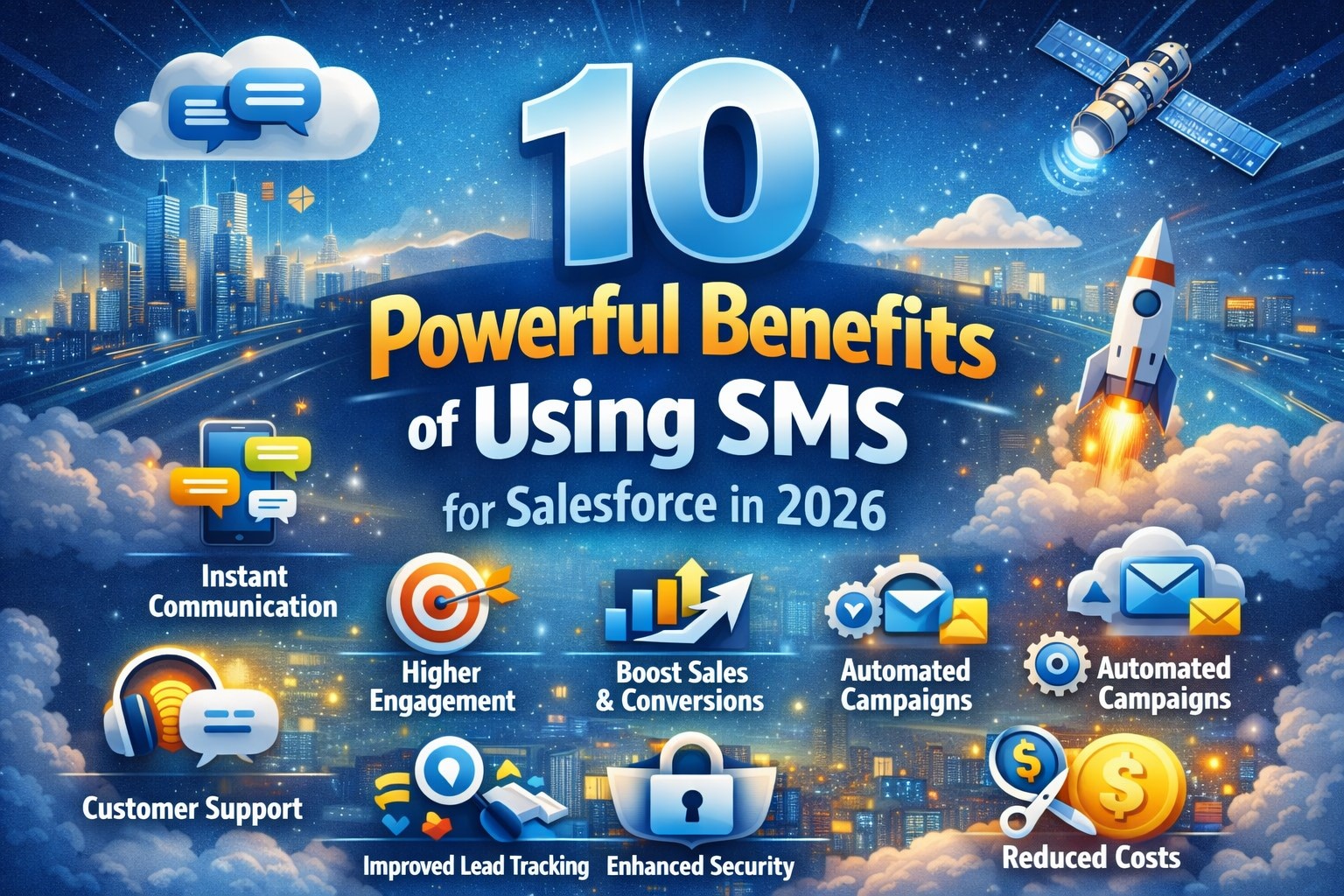
Therefore, the right app can reshape how teams manage customer communication inside Salesforce. It also helps businesses keep the communication seamless, traceable, and customer centric. Therefore, in this blog, we’ll discuss some of the major benefits of considering SMS for Salesforce and will share a tip on how to find the best SMS app for Salesforce.
SMS App for Salesforce: 10 Game-Changing Benefits
Here are the advantages of using SMS for Salesforce that show why many companies now depend on texting as a core part of their Salesforce setup.
- Faster Response Times
Momentum matters, and interest in replies is lost when it takes too long to reply, and minor problems become bigger than they should be. Text messaging stimulates a faster back and forth since individuals will read it almost instantly. By working within the CRM, the teams can provide updates while reviewing the account without entering numbers or opening additional tools.
Such a sense of urgency makes conversation active. Potential customers or clients get clarification earlier; questions regarding service are transferred to solution, and fewer situations linger without direction.
- Conversations Tied to Real Customer Data
The message alone hardly ever conveys the whole picture; this is why context should be based on past calls, purchases, tickets, and notes. Salesforce SMS integration makes it easier for businesses to connect SMS to the CRM record, and every communication is a part of a continuous narrative.
Those that enter the conversation later will be able to know what was promised and what is still open. This also makes handovers cleaner, and the customer does not get frustrated by repeating themselves. Therefore, organizations operate with shared understanding instead of fragments.
- Enhanced Engagement Rates
Reaching customers consistently is not simple. Emails compete with promotions and internal traffic, and many never receive attention, and texts typically perform better because they arrive in a space people check frequently throughout the day. For instance, short reminders or confirmations feel appropriate to the format and are easy to act on. Since messages originate from the CRM, teams can still reference accurate data, which helps keep outreach timely and relevant.
- Improved Teams Productivity
Administrative tasks like logging activity, copying information, and updating systems add up often consume more time than expected. When texting is part of the CRM workflow, much of that effort disappears. Messages record automatically; templates shorten preparation, and stored data fills in common details. Teams regain time they can invest in planning or deeper conversations, and over months, this shift produces measurable gains without changing team size.
- Better Follow-up Discipline
The importance of follow-up is unquestioned, but volumes make it difficult to keep track of conversation flow. But with SMS integration into the CRM, reminders are allowed to be scheduled, or outreach may be automatically activated when the progress is low. Moreover, leaders can assess activity within the team and spot gaps in time. Also, this benefits customers too as they get consistent attention, and opportunities are less likely to be left out of sight.
- Streamlined Appointment Management
Missed appointments disrupt operations in ways that are difficult to recover from during a busy day but with a timely text reminder often prevents disruption. Customers can confirm with a quick response or flag conflicts before they become problems. Because those replies update the CRM, everyone sees the same information. This leads to improvement in planning, preparation becomes easier, and teams spend less energy rearranging schedules at the last minute.
- Scalable Two‑Way Communication
As your business grows, it also brings complexity because what works for a small list of contacts wouldn’t work when the list expands to thousands. Integrated SMS helps in arranging replies even as volume increases, and messages can alert the right person, create tasks, or set up predefined processes automatically. This ensures teams remain responsive without feeling overwhelmed, and customers still experience direct communication, while the organization can remain organized behind the scenes.
- Stronger Compliance & Opt-in Management
Business texting operates within clear legal boundaries, and informal tracking creates unnecessary exposure. Centralizing permissions inside the CRM makes expectations visible before any message is sent, for instance, opt-outs apply immediately and remain documented for future reference. When audits arise, information is already in place, therefore, this structure reduces anxiety and allows teams to focus on serving customers properly.
- Transparent Reporting & Attribution
Leaders want to understand which activities influence outcomes, where to intervene for updates. That understanding requires complete data, and leaders get it when SMS is integrated within the CRM. It becomes part of the performance story, and managers can review response times, measure how conversations affect conversions, and spot delays in execution. Planning discussions shift from opinion toward evidence, which improves decision quality across departments.
- Customer‑Centric Experience
Customers notice when communication feels simple and also notice when it feels complicated. Texting supports quick exchanges that fit naturally into daily routines. Questions receive prompt answers, and updates arrive without effort. Even if multiple teams contribute, coordination stays invisible because everyone works from the same record. What customers experience is clarity and speed.
How to Find the Best SMS App for Salesforce
- Prioritize Native CRM Integration: Ensure the app offers good connectivity to other apps. Both incoming and outgoing text must sync automatically to the right record, so users can review communication in context without checking other systems.
- Enable True Two-Way Messaging: Go for apps where customer responses appear instantly inside the platform, making it easier to reply, reassign responsibility, or move work forward.
- Leverage Automation and Triggers: Select Salesforce Integrated SMS apps that allow your departments to send messages once milestones, deadlines, or changes of status have taken place. This saves you the time of having to do it manually and frees them.
- Use Personalization Features: The best SMS app for Salesforce instantly offers details that are already stored in the CRM, such as names or booking data that can be typed in the message, making it relevant, timely with little effort.
- Ensure Compliance Management: Select apps that capture permissions and opt-out updates. When you offer consistent policy enforcement and clear documentation, you protect the organization and build customer trust.
Conclusion
Hopefully, this blog has helped you understand why your business need Salesforce SMS integration in the CRMs. Since SMS for Salesforce helps businesses streamline their communication, boost productivity and more importantly make conversations customer centric. This works only when you choose the best SMS app for Salesforce that offers automated SMS, CTI, and multi-channel messaging, all inside Salesforce.